.jpg)
A SaaS founder opens his budget for next year. He scrolls to the revenue line, types in a number, and moves on. Five new customers per month. Because that's roughly what it was last year. Because it feels like a realistic goal.
And then the year begins. In January, two new customers. Three in February. A deal that seemed certain in December gets pushed to Q2.
By the end of Q1, the gap is already too wide to close.
What went wrong? Not the level of ambition. Not the market. Not the product. The model was off.
The problem with one-dimensional SaaS forecasting
A budget with flat numbers is better than no budget. But it gives you little control.
If your budget says you’ll bring in five customers per month and you only get two, do you know what went wrong? Was it the lead generation? The conversion rate on demos? The capacity of your sales team? Churn that was higher than expected?
If you don’t know, you can’t do anything about it. You can’t make adjustments based on a number. You can only make adjustments based on the cause of that number.
That is the fundamental problem with one-dimensional SaaS forecasting. You look at an outcome, but you have no insight into the underlying drivers. And those drivers are exactly what you, as a founder, can influence.
SaaS forecast: your company as a machine
Every SaaS company operates like a machine. It has buttons and levers. You press something, and something happens. The question is whether you know which button does what.
The best management teams I know have a pretty clear grasp of this. They know that if demo intake drops, revenue follows three months later. They know that if churn rises, the cause was often already visible in customer behavior six weeks earlier. They know how many leads a sales rep needs to hit their quota.
That is three-dimensional thinking. Finance is not just a report you compile after the fact. Finance is a tool that helps you understand what is happening in your company and what you can do about it.
A good dashboard makes those buttons and levers visible. It shows where the machine is running rough, before it affects your revenue.
Good forecasting starts with verifiable assumptions
So, how do you ensure the forecast is actually worth anything? The answer lies in the quality of your assumptions.
If your budget says you’ll bring in five customers per month, and your rationale is “that feels realistic,” then your forecast is a wish. Not a plan.
But if you say:
- We close an average of 20% of our demos.
- To close 5 customers, I need 25 demos.
- Last quarter, 70% of those demos came from inbound, 30% from outbound.
- Based on our current marketing capacity, we expect 18 inbound demos.
- That means we need to generate 7 demos through outbound.
- Which requires at least two active sales reps who are already fully trained.
Then you have an assumption you can test, adjust, and justify.
Practical example: build a SaaS forecast by working backward from your goal
Suppose your goal for next year is 5 million ARR. How do you get there?
Start at the end point and work backward.
Imagine: €5 million ARR with an average contract of €25,000 per year means 200 active customers. Let’s say you currently have 130 customers, so you need to acquire 70 more (net). If your historical churn rate is 10%, you actually need to close 83 new customers to end up with 70 net.
So 83 customers, spread over 12 months, means an average of 7 new customers per month. With a demo conversion rate of 25%, you need 28 demos per month. With a lead-to-demo conversion rate of 40%, that means 70 qualified leads per month.
Can your sales team follow up on 70 leads per month and run 28 demos? How many reps do you need for that? And when do they need to be trained? Because a new sales rep rarely performs at full capacity during the first 3–6 months.
Suddenly, a revenue goal is about hiring, onboarding, marketing capacity, and lead generation. That is three-dimensional thinking. And that is exactly the information you need to make sound financial and business decisions.
Finance as an integral management tool for SaaS
If you set this up properly, something fundamental happens. Finance is no longer just a department that produces reports. Finance becomes a management tool connected to everything that happens in your SaaS company.
Your CRM provides the pipeline data and your sales process provides the conversion rates. Your product provides usage data and data on customer behavior, and your HR system provides the headcount of your sales team. All that data feeds your financial model.
And your financial model doesn’t just tell you how things stand financially. It tells you where you need to intervene and when.
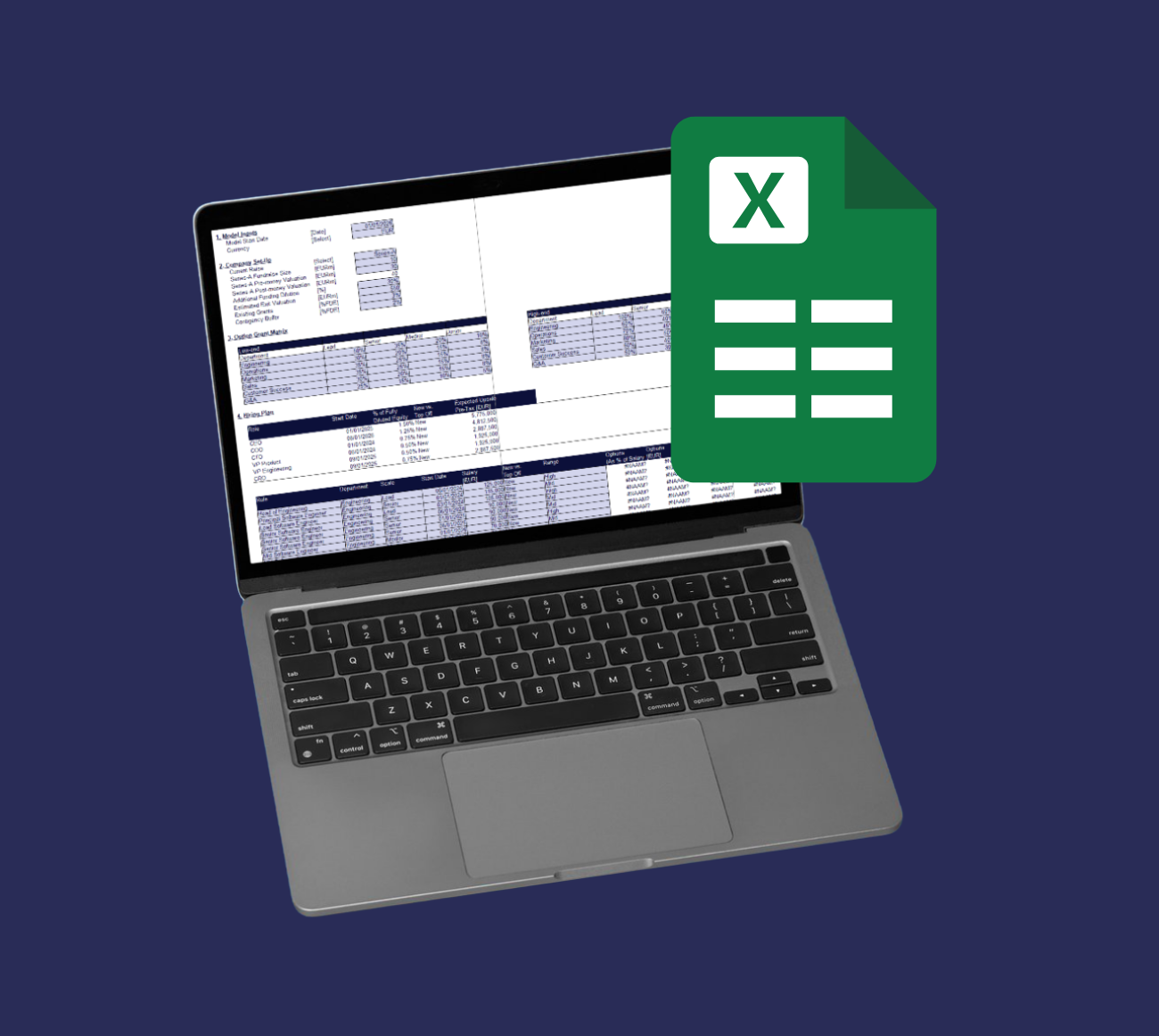
And that is exactly where F.INSTITUTE adds value. We help SaaS founders move beyond static budgets and backward-looking reports by building financial models that connect directly to the operational reality of the business. From pipeline and conversion metrics to hiring plans, churn, and cash flow.
Because once you can see the drivers behind the numbers, forecasting stops being guesswork and becomes a tool for steering growth.
Want financial advice for your tech company?
If you want to explore this topic further and find out what F.INSTITUTE can do for your organization, don't hesitate to get in touch with us. We'd love to discuss your goals!