For most SaaS founders, the exit is the end goal. It’s the validation of years of building, selling, refining, and starting over. It’s the reason early employees accepted stock options instead of a market-rate salary. It’s the payoff. But how you work toward this point largely determines what you’ll get in return.
What we see time and again: founders who think an exit begins the moment a buyer comes knocking. But by then, you’re actually already too late. The preparation starts years earlier, in the daily decisions about contracts, reports, processes, and how dependent the company has become on certain individuals.
This article isn’t about how to execute a perfect exit. It’s about what structurally goes wrong and what you can do right now to prevent it.
Financial documentation is boring, but it determines your exit price
A buyer wants certainty quickly. The faster you provide answers, the more trust that generates. And trust translates into money and the willingness to persevere when things get tough.
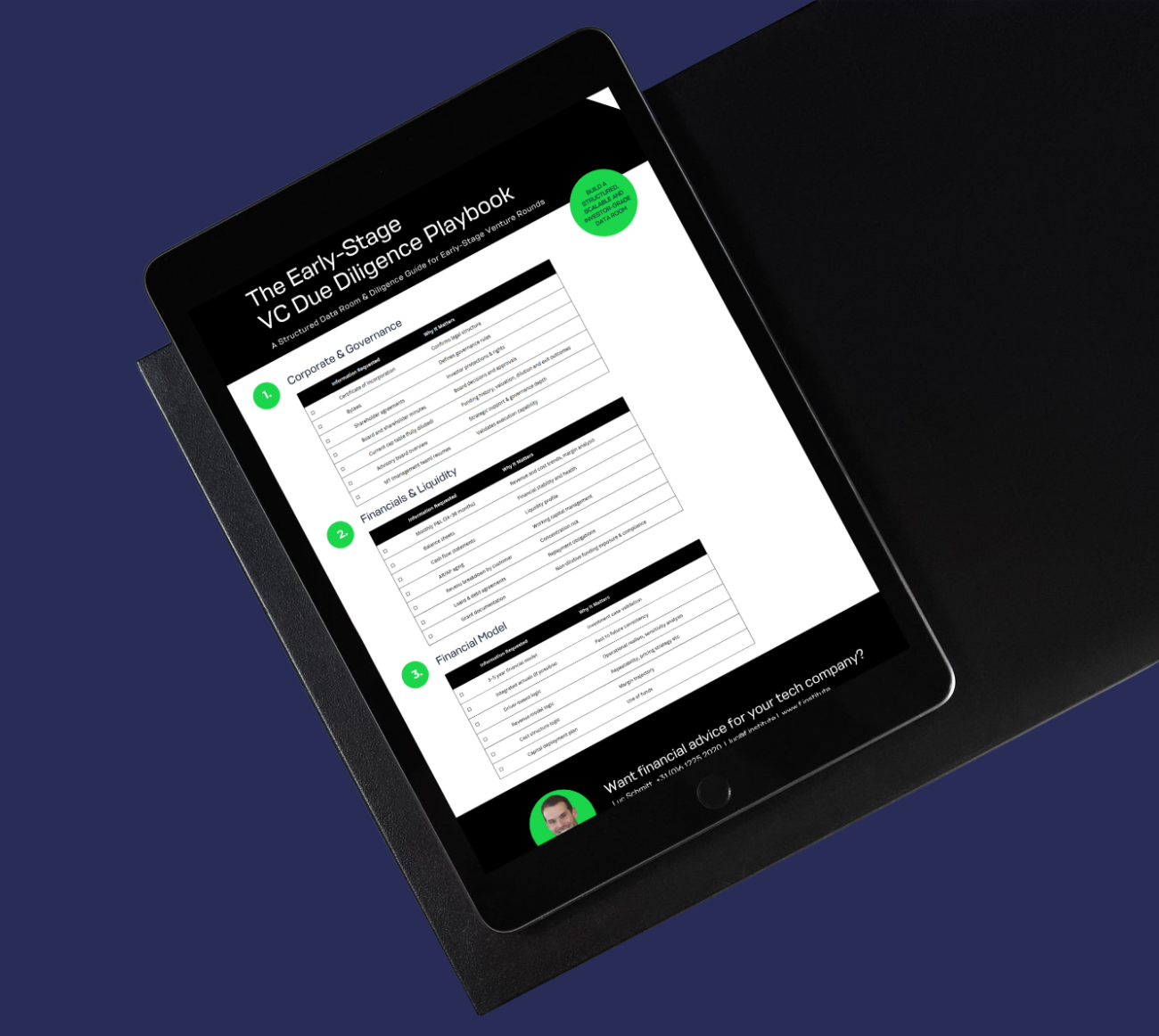
What do you need to have ready at a minimum before entering serious talks? First and foremost, the financial reports for the past three years, including audit trails.
- Your MRR waterfall, broken down into new, expansion, contraction, and churn.
- Customer cohorts.
- Product architecture and technical documentation.
- Your contract portfolio, including terms, pricing agreements, and special clauses.
- HR documentation regarding stock options, vesting schedules, and employment contracts.
- And your cap table: complete, up-to-date, and free of surprises.
Anyone who can provide this information within a week demonstrates a level of control and maturity that buyers notice immediately. When assembling the basics takes months, it inevitably raises questions about how the company is run.
SaaS exit: understanding why a buyer buys
The ROI rationale is always there. Every buyer wants to recoup their investment. But the path to getting there varies, and that’s exactly the information you want to have.
Sometimes it’s about product synergy: your functionality fills a gap in their own offering. Sometimes it’s about market position: they want to quickly enter a segment you’ve already built. Sometimes it’s about technology, IP, or a specific team.
Sometimes it’s simply about your customer base.
The sooner you understand what a buyer is looking for, the more leverage you have. You can structure your data room differently. You can highlight other aspects of the company in discussions. And you avoid wasting months on a party looking for something you don’t offer.
Just ask early in the process: “What makes this interesting to you?” That’s not a sign of weakness, but part of the negotiation.
Build a deal team well in advance of your SaaS exit
An exit takes a lot of time. You need time for your legal counsel, an M&A advisor, financial advisor, accountant, and in between, an investor who wants updates. At the same time, the business has to keep running. Customers need to be served, and sales must continue. Churn also requires attention. Founders who try to do all this alone get bogged down. Or the business gets bogged down.
So decide early on who’s on your deal team, even before the process begins. Who will populate the data room? Who will answer technical questions? Who will oversee day-to-day operations while you’re in due diligence meetings? It doesn’t have to be a large team. But there needs to be a team.
Pitfall 1: You get creative with the numbers
This is the most common and also the most dangerous mistake. Because your exit is the biggest transaction of your life. The pressure to end up as high as possible is enormous. And then the temptation is great to present the figures just a little more favorably. An unpaid pilot counted as a customer. A trial subscription included in the ARR. One-time service revenue suddenly booked under recurring revenue.
Don’t do it. Anything creative in your reporting will come to light. Always. An experienced buyer with a good M&A team has seen this hundreds of times. They know exactly what to look for. And if they find something, you won’t just get a lower price. You’ll also have a credibility problem that poisons the rest of the process.
What we recommend to founders: be transparent sooner rather than later. If something is off with your numbers, bring it up yourself early in the process. A buyer who discovers it on their own will react differently than a buyer who hears it from you.
Pitfall 2: Your contracts are a mess
In the early stages, you make deals as they come. A client wants a different term: fine. A different indexation: agreed. A clause that costs you almost nothing but keeps the client happy: done.
After five years, you have a contract base that looks like a collection of exceptions. No two agreements are the same. Some were never formally signed. Others contain agreements that were made verbally but aren’t written down anywhere.
For a buyer, that’s a serious problem. Not just legally, but financially as well. If you can’t demonstrate the exact obligations and rights for each customer, it’s impossible to model reliable revenue. And if they can’t model it, they’ll factor it into the price, downward that is.
So start cleaning up your contract structure as early as possible. Consistent terms, standardized pricing agreements, clear termination clauses. And those handshake deals from the past? Make sure to document them now.
Pitfall 3: The company relies on you
This is the most underestimated risk in a SaaS exit. A buyer is buying a company, not a person. If the company collapses as soon as you leave, or even when you’re on vacation for three weeks, they’re essentially buying into a dependency. That’s a risk they factor into the price. Or one they might even walk away from.
Want financial advice for your tech company?
If you want to explore this topic further and find out what F.INSTITUTE can do for your organization, don't hesitate to get in touch with us. We'd love to discuss your goals!