If you’ve just closed your Series A and are about to host your first “real” board meeting, congratulations - and brace yourself. That recurring quarterly ritual that looks neat on a calendar will, in practice, steal more hours than you think.
Two weeks before your first meeting, normal office rythm turns into spreadsheet panic-everyone’s pulling numbers from different sources, and you realize there’s no single place where all the right data lives. Welcome to the world of boarddecks.
As a CFO, I’ve sat through my share of board meetings. I’ve watched founders stay up past midnight trying to reconcile ARR numbers across HubSpot, Stripe, and an overworked spreadsheet. I’ve also seenboard members flipping through 60 slides stuffed with data and still wondering: “But what’s actually happening?”
Here’s the thing: most founders build their first board decks as if they’re being audited. They pack in every metric they can find, hoping density will equal credibility. But board decks aren’t about control. They’re about calibration.
The goal isn’t to show you’ve got every lever memorized - it’s to prove that you understand the machine you’re building, that you’re noticing its patterns, and that you’re humble enough to ask for help when the data tells an uncomfortable story.
When done right, a board deck becomes a valuable leadership tool. It doesn’t just document your performance; it sharpens your thinking,brings alignment, and helps you write the next chapter of your company’s story- together with the people in the room.
Why the Board Deck Matters
Boardmeetings often sit somewhere between a therapy session and a strategylab.
They can feel tense, sometimes intimidating - but when used well, they become valuable checkpoints in your company’s journey.
Think about it: once every quarter, you get a captive audience of smart,invested people whose job is to help you win. That’s rare. But it only works if you give them something worth engaging with - not a pile of metrics, but a narrative about where the business stands,where it’s going, and what’s standing in the way.
I’ve seen the best results when startups start treating board prep as a strategic exercise rather than a reporting chore. The act of assembling the story - not just the numbers - forces founders and CFOs to zoom out. Suddenly, they’re not just talking about pipeline coverage or burn multiples, but about whether the company is truly getting better at the right things. Besides, the mindset of going in to a open, constructive dialogue rather than a position of one-directional reporting and defensiveness makes a board meeting a more relaxed overall experience.
So yes, it’s worth doing right.
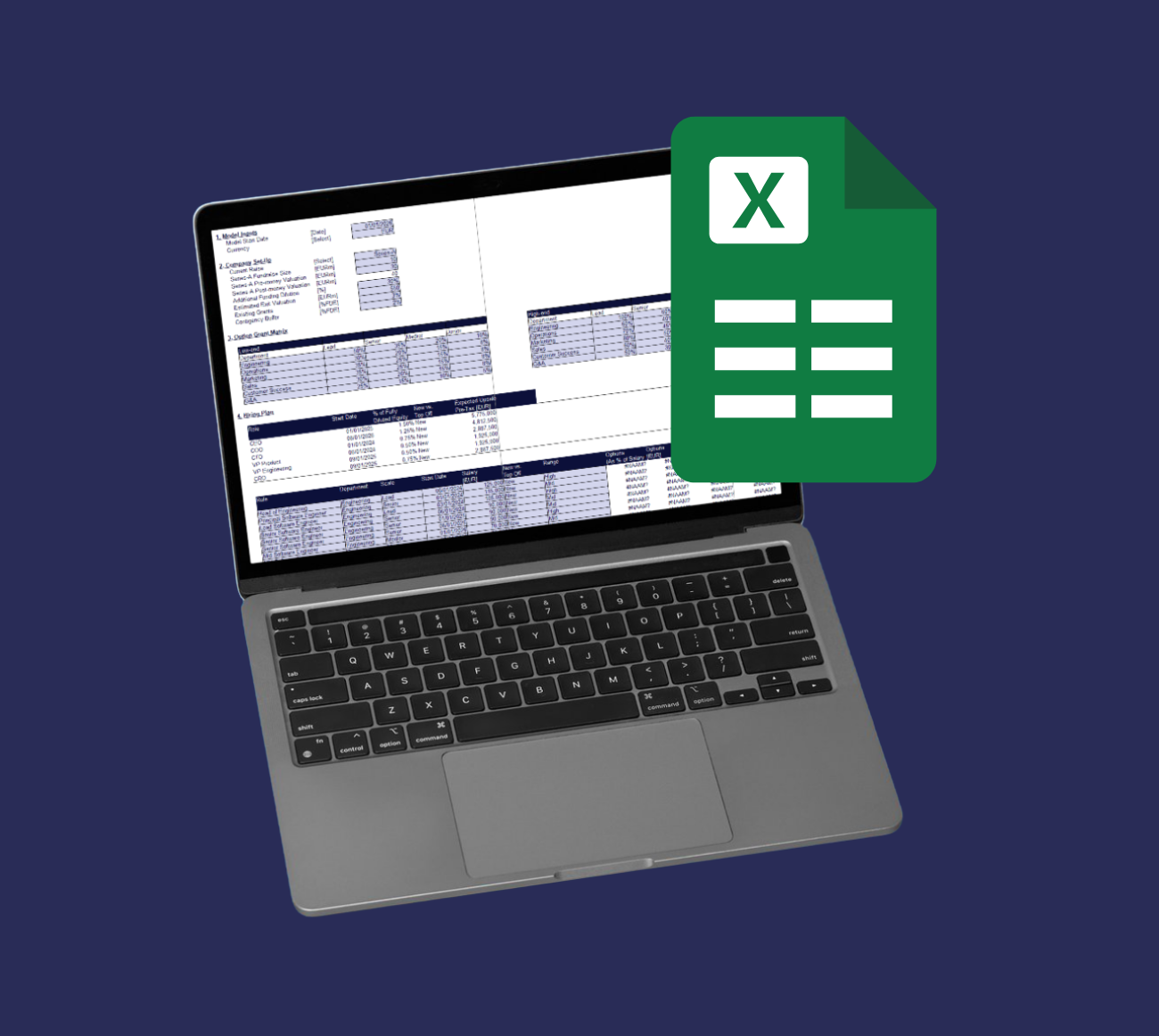
And to make it easier, I’ve distilled the key principles below, along with a board deck template you can customize - a structure that helps you spend less time on formatting and more time sharpening your message.
Download the SaaS Board Deck Template here.
1.Keep It Consistent - So People Can Think Instead of Decode
Every quarter, I see companies reinvent their deck - new sequence, new charts, new color scheme. And every quarter, board members tend to lose focus when they re-learn how to read it.
If you want thoughtful input, reduce cognitive load. Keep the same structure, same flow, same metric definitions. It helps people focus on what changed in the business vs. last board meeting- and quickly catch up with the narrative. This applies in particular for investors who often hold seats in a number of companies at the same time.
And whatever you do, pair every number with meaning.
“€350K new ARR” tells me nothing on its own. Was it a stretch? A miss? Did it come from three whales or fifty smaller clients? Add the conclusion that gives context.
If you don’t yet have a fixed KPI framework, sit down with your Series A lead, chairman and/or CFO and define one. It’ll save you months of chaos later. Our downloadable board template can help you start from something structured.
2.Meeting Rhythm: Short, Sharp, and Predictable
Frequency: Once a quarter is enough.
If things are on fire, add a quickmid-quarter pulse check, but resist the temptation of monthly boards.Nothing meaningful gets built or measured in four weeks, and you’ll only end up rehashing old ground.
Length: 2-3 hours is the sweet spot.
Long enough to dig into the material,short enough to keep everyone sharp. Any longer than that is where attention typically starts flatlining.
Timing: Hold your board shortly after quarter close.
That way, sales numbers are final, financials are reconciled, and the discussion is grounded in facts, not forecasts. You’ll have fewer “I think we’ll land around…” moments and more factual debate.
Preparation: Send materials at least 5business days before the meeting. And for bonus points: have the CEO or Chair do short 1:1 check-ins with each board member. It clears smaller questions early and leaves meeting time for higher-value conversation. Also, when it comes to bigger, more critical topics its best to built support in advance- instead of dropping I out of the blind in the board meeting itself.
3.The Real Purpose: Calibration, Not Reporting
Here’s the mindset shift that changes everything:
A board meeting isn’t an inspection; it’s a calibration.
Each time you meet your board, your job is to reorient them - to make sure everyone still agrees on the chosen path.
So,before each meeting, ask yourself:
- Is the plan still working?
- Are we moving fast enough to stay relevant?
- Do we have the right people in the right seats?
- Are customers behaving as expected?
- And are we still climbing the right mountain?
When done right, your board meeting becomes less of a status update and more of a strategy session - the one moment in your quarter where you get to zoom out, breathe, and sanity-check your assumptions against people who’ve seen a dozen other journeys like yours.
4.The Flow That Keeps Everyone Awake
Boardmeetings are a strange hybrid of business theater and decision lab.There’s rhythm to them, and when that rhythm works, the whole thing feels quite smooth. When it doesn’t, everyone starts checking their watches and refreshing their inboxes under the table.
A well-run meeting follows a natural flow - a story arc that mirrors how your leadership team thinks about the business. It should build from the big picture toward the details and then back out again to the horizon.
Here’s a sequence I’ve seen work well:
CEO Overview → Sales → Product → Marketing → Team → Financials→ Admin → Strategic Deep Dive
Each section should logically hand the mic to the next. Sales leads to product, product to marketing, marketing to finance, finance to strategy. When done right, no one ever wonders “why are we talking about this now?”
Rough timing:
- CEO Overview: 30 minutes.
Big picture, tone, key wins, and existential problems. Set the mood, frame the conversation. - Department Updates: 45–60 minutes.
Deep enough to surface trends and exceptions, shallow enough not to become performance reviews. - Administrative / Approvals: 15 minutes.
Minutes, ESOP, filings. Energy kryptonite if done earlier. - Strategic Discussion: 30 minutes.
The part people actually remember. Use it to debate one or two high-impact topics.
The flow matters because energy matters. Start broad, dive deep, then zoom out again. A good meeting should more or less feel like a single narrative - not ten PowerPoint decks stitched together.
If you notice attention dropping halfway through, don’t add more data.Add framing.Remind everyone why this topic matters to the bigger story of growth,product-market fit, or runway.
5.The Deck That Tells the Story
The structure of your deck should mirror that same rhythm. When built right, your slides don’t just share information; they guide how the board thinks about your company.
1.What’s Going Well / Not Going Well
Start here, always. One slide, two columns, brutally honest.
Most boardmembers are not looking for perfection, they’re willing to help.
On the left: wins worth celebrating. Product traction, key hires, closed deals, happy customers, new partnerships.
On the right: problems keeping you up at night. Process bottlenecks, lost customers, delayed launches, cash constraints.
A good rule of thumb: if you can’t name at least three meaningful problems, you’re either too close to see them or too nervous to say them. The best founders build credibility through candor.
And don’t forget reflection. What’s different since your last board?What did you believe three months ago that turned out to be wrong?Market, ICP, pricing, hiring? Your changing understanding is the story of early-stage growth. Boardslove to see that evolution.
2.Headline Reel / Summary KPIs
Your scoreboard slide. It should answer, in 60 seconds, the only question that really matters: “Is this business getting better?”
Selected metric can vary, but for most early-stage SaaS companies, the essential four are:
- Bookings / New ARR: How did we do vs. plan?
- NRR & Gross Retention: Are we keeping and growing our customers?
- Burn & Burn Multiple: How efficiently are we using cash to grow?
- (Optional extras as you mature: CAC, Payback, LTV.)
Use visuals that help the eye - simple tables, color-coded deltas, smallicons, maybe a traffic-light system (🟢good, 🟠watch, 🔴problem).
Investors see dozens of decks each quarter. Color helps them quickly anchor where you stand.
The more consistent your KPI slide, the more context your board retains meeting to meeting - and the less time you’ll spend re-explaining your numbers.
3.Runway
Best practice is to bring cash to the front of the conversation.
There’s nothing worse than getting to slide 25 before finding out there is only 4 months of runway left. Cash defines every other decision:hiring, pricing, marketing, fundraising. Make sure everyone knows the baseline from the start.
Showthree things, clearly:
- Cash balance today
- Monthly burn rate
- Months of runway left under current plan
That’s it. No need for a wall of numbers. Add a few quick sentences about key underlying assumptions (e.g., “assuming current hiring plan and no new debt or equity”). It’ll set the right context for the rest of the meeting.
4.Topline Growth
Once everyone knows the financial runway, you can move to the fun part -growth.
Show your MRR development visually: New ARR,Upsell/Expansion,Churn,and Downsell.The classic “MRR bridge” or waterfall works beautifully here.
Then bring in the forward-looking lens: actuals vs. plan vs. forecast. If you’ve re-forecast since the last board, note why.
Good questions to guide your commentary:
- Where’s growth coming from - new business or expansion?
- Which motion (outbound, inbound, PLG, partners) is scaling best?
- Are we winning faster or slower than before?
- What assumptions have shifted since last quarter?
Keep it visual and comparative - nobody remembers a spreadsheet wall, but they will remember a chart with a clear story.
5.Cohorts - Showing the Quality Behind the Growth
Cohorts are one of the most underrated slides in early-stage SaaS. They don’t just show how much you’re growing; they show how well you’re growing.
Anyone can add ARR. The real question is whether your new customers behave better than your old ones. That’s what tells you if the product is improving or if you’re scaling cracks into the foundation.
A good cohort chart answers a single question:
“Are newer customers behaving better or worse than those before?”
When cohorts are steady or improving - expanding faster, churning later,spending more -it’s happy times. When they’re slipping, even slightly, it’s a signal to dig in.
Show your cohorts simply:
- Rows: customer cohorts by start month or quarter
- Columns: months since acquisition
- Values: % of ARR retained or expanded over time
Don’t overload the chart. Just highlight patterns: early churn improving?Expansion kicking in earlier? Declines stabilizing?
Thenadd your narrative:
“2024 cohorts retain 12% more by month six than last year - improved onboarding and customer success coverage are paying off.”
This is a great slide to include, because it’s truth serum. Cohorts turn your ARR line into something three-dimensional - a living picture of product-market fit.
6.Sales KPIs - The Pulse of Your Revenue Engine
Ifyour board deck were a body, the Sales section would be the heartmonitor.
It tells the story of how predictably the company converts effort into revenue.
This section should blend numbers with narrative. Don’t just present metrics; interpret what’s changing and why.
Include a handful of metrics that show health and efficiency:
- Quota attainment per rep (and how that’s trending)
- Pipeline coverage ratio
- Conversion rates and deal velocity (is it improving or slowing?)
- Average deal size and sales cycle length
- Forecast accuracy (last quarter’s forecast vs. actual)
Add short context:
“Top-of-funnel doubled this quarter, but enterprise cycles stretched by 30% - we’re adjusting expectations for larger deal complexity.”
7.Product - From Features to Focus
This slide tells what the team is building and why it matters commercially.
Keep it tight. Which bets are paying off? Which aren’t? What’s been deprioritized or delayed, and why?
If you have mockups for upcoming launches, show one. It grounds abstract software features in something visual and human. And if you’re still searching for stronger product-market fit, talk openly about where feedback is mixed or adoption is slower than expected.
8.Team - The Engine Behind the Metrics
This is the slide where you show your orgchart today versus the orgchart you’ll need tomorrow.Does your team have the horsepower and experience to hit the next milestones?
Elements to include:
- Current headcount by department
- Key hires last quarter
- Open critical roles
Callout the roles that are blocking growth,not the ones that are “nice to have.”
“We’re missing a senior PMM, and it’s slowing GTM alignment.”
That’s a conversation boards can help with - through introductions,referrals, or even pre-interviewing senior candidates.
This is also a good spot to touch on cultureand retention.
Isthe team stable? Any flight risks? How’s morale? A one-sentence pulse check here goes a long way.
9.Marketing - The Demand Engine
Marketingslides often swing between two extremes: fluffy (“our brand is growing!”) or overly granular (“here’s 14 columns of MQLdata”). You want the middle ground - narrative plus numbers.
Potentialtopics to address:
- Demand Generation: MQLs, SQLs, pipeline contribution, CAC trends.
- Channel Mix: Paid vs. organic, inbound vs. outbound, partner referrals.
- Efficiency: Payback period, ROI by campaign, CAC-to-LTV trajectory.
- Brand: Mentions, PR, and community signals - things that might not close deals yet, but strengthen your funnel.
And again - add insight:
“Weshifted messaging from ‘feature depth’ to ‘business outcomes’ and saw demo-to-close conversion rise 25%.”
10.Financials - The Scoreboard Behind the Story
After the functional updates, zoom back out. This is where we connect all departmental decisions with the numbers.
Personally,I am not a fan of digging through complete financial statements in aboard meeting (although they’re useful to add in the appendix for interested readers), bur rather work with headlines that are digestible, like:
- Summary P&L: revenue, gross margin %, OPEX, EBITDA (actual vs. plan)
- Cash Flow: inflow/outflow, net burn
- Runway: months of cash at current burn
- Unit Economics: CAC, payback, LTV, NRR trends
If you’re approaching a raise, use this section to align on fundingstrategy- timing, target amount, milestones needed before going out. This is also a chance to discuss scenario planning - what happens if growth slows, expenses rise, or funding stretches longer than expected.
11.Admin - Closing the Loop
Keepthis short and structured. It’s very easy to lose a lot of time here, especially when scheduled at the beginning of the meeting.Handle governance cleanly and confidently.
Typical topics:
- Approval of prior board minutes
- ESOP approvals (new grants, pool refresh, senior hires)
- Audit, insurance, or statutory filings
- Bank signatory updates
- Next board date confirmation
Handle these at the end, in a closed session if needed. Administrative housekeeping is essential, but it should never hijack your meeting’s energy. If certain elements require a wider conversation- try to allocate them to a subcommittee (audit, remuneration) and have these members loop back in the next board meeting.
12.Strategic Deep Dive - The Board’s Real Value
The final 20-30 minutes are where good meetings become great ones. With everyone up-to-speed, choose one or two deep-dive topics - the kind that shape your trajectory.
Examples:
- Repositioning pricing strategy or packaging
- Rethinking GTM model (PLG assist, SDR model, partner channels)
- Evaluating new market entry
- Planning the next funding round
- Leadership scaling and org design
Thebest deep dives are forward-looking and vulnerable: the problems you haven’t solved yet.
Invite your board into the decision, not the justification. You’ll get sharper insights and stronger buy-in when it’s time to act.
Closing Thoughts
Aboard deck isn’t a report. It’s a conversational piece. It should reflect not only where the company stands, but how it’s evolving -what it’s learning, breaking, and rebuilding quarter after quarter.
The best board meetings feel alive. They’re honest, strategic, slightly uncomfortable, and ultimately energizing. When you leave the room,the next quarter’s story should already be writing itself - goals sharpened, priorities clear, and confidence renewed. And remember: your board isn’t grading you. They’re investing their experience in you. Use them. Ask what’s working across their portfolios. Borrow their scars before earning your own.